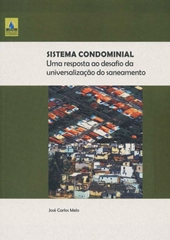
During the 1980s, the so-called Condominial model was developed in Brazil for the construction of water supply and sewerage networks as a response to the challenges posed by expanding services to peri-urban neighborhoods. Although the Condominial model has proven capable of addressing the many social and engineering challenges found in these areas, it is also a generic alternative for the design of water supply and sewerage systems.
(José Carlos Melo, 2005)
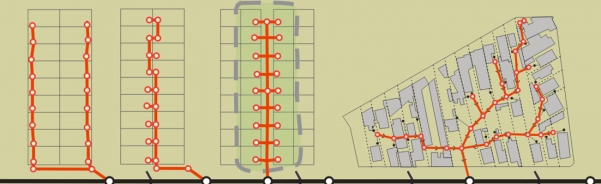
The methodology includes the participation of the residents and property owners who will be served and can often result in lower costs because pipe sections are shorter. This is achieved through the local concentration of wastewater from a single “housing block.” Thus, a group of houses is organized into a “block” known as a condominium.
Here you will find video classes and materials on Condominial sewerage systems prepared by specialists with many years of project experience, including the creator of the Condominial methodology, engineer José Carlos de Melo, who presents the introductory module of the course. All of this is available free of charge and includes several languages (for more details, see the list of course modules below and the languages available for each one).

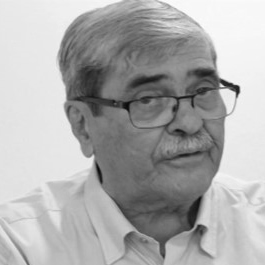
Civil Engineer, consultant for the IDB and the World Bank. Creator of the Condominial Sanitation Methodology. Experience as an IDB and World Bank consultant in several countries across Latin America and the Caribbean.
Civil Engineer, consultant for the IDB and the World Bank. Director of IPJ Engenharia, specialist in the implementation of Condominial Sanitation Systems with more than 35 years of experience in the field.
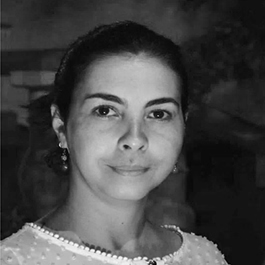
Social Worker, specialist in social work and community development. She has more than 10 years of experience in social work related to sanitation systems.